

Associated Food Stores has always been built on a simple idea: independent retailers are stronger when they work together. Over time, the way we support that idea has evolved. The pace of retail has accelerated. Competition has intensified. Expectations from shoppers, suppliers and retailers have grown more complex. To remain relevant and competitive for decades to come, we must continue evolving how we create value across the cooperative.
That is why we are focused on the Value Chain.
What We Mean by “Value Chain”
The Value Chain is not a department, a project or a short-term initiative. It is the way we intentionally connect the work we do across AFS to create measurable value for our retailers, from supplier to shelf to shopper.
At its core, the Value Chain aligns pricing, merchandising, advertising, space management, exclusive brands, loyalty and customer engagement into a coordinated system. Each of these functions has always existed at AFS. What changes is how they work together, with shared goals, clearer ownership and a stronger focus on outcomes.
When these elements move in alignment, value is created more efficiently. Retailers gain clarity. Execution improves. Decisions are made with a full view of their impact across the business. 
The Value Chain can be thought of like a relay race. Each team runs a critical leg, and success depends on clean handoffs, shared timing and trust between runners. Speed matters, but precision matters just as much. If one handoff is missed, the whole race slows down.
Pricing, merchandising, advertising, space, brands and loyalty all carry the baton forward. When those teams move in sync, retailers gain momentum. When they operate in isolation, value is lost before it ever reaches the shopper.
The Value Chain ensures every runner knows their role, understands the pace and hands off responsibility cleanly so the cooperative finishes strong.
How is the Value Chain different from the Supply Chain?
The Supply Chain focuses on how product moves.
The Value Chain focuses on why decisions are made and how value is created.
Supply Chain answers questions like:
- How do we source product?
- How do we warehouse it?
- How do we deliver it efficiently?
Value Chain answers questions like:
- Is this the right product for our retailers and shoppers?
- Is it priced, promoted and merchandised effectively?
- Does it drive margin, loyalty and long-term competitiveness?
The Supply Chain is a critical component of the business. The Value Chain is broader. It connects strategy, execution and results across the full retail system.
Why the Value Chain Matters
Independent retailers operate in an increasingly complex environment. National chains leverage scale, data and logistics to move quickly. To compete effectively, our retailers need more than great products and pricing. They need a system that works smoothly in tandem on their behalf.
The Value Chain allows AFS to:
- Deliver clearer, more consistent strategies across pricing, promotions and merchandising
- Improve margin opportunities while maintaining competitiveness
- Simplify execution at the store level
- Respond faster to market conditions and shopper behavior
- Strengthen the overall value of the cooperative model
This approach helps ensure that decisions made in one area support success in others, rather than creating friction or confusion.
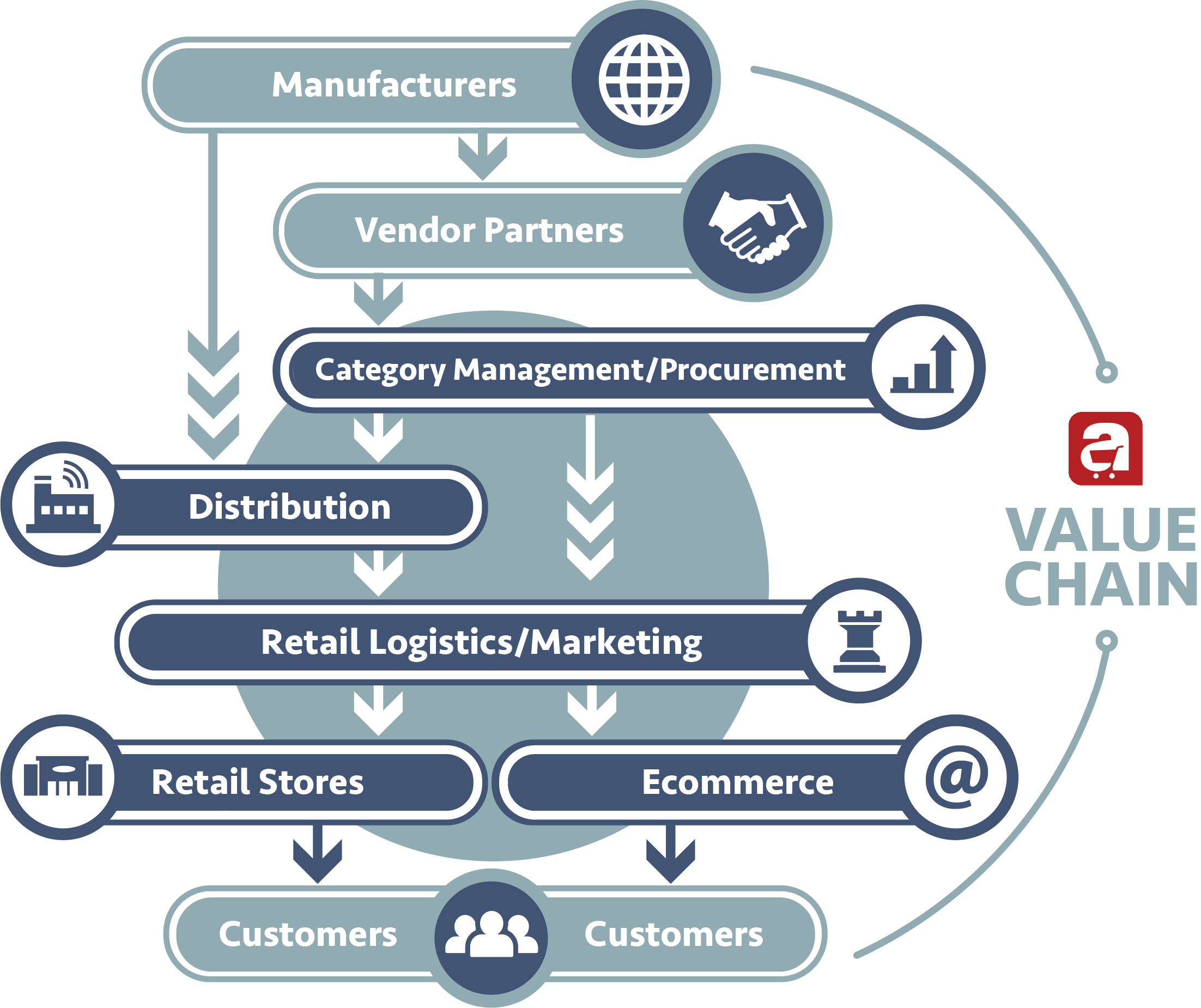
From Silos to Alignment
Historically, many retail support functions across the industry, including at AFS, have operated in functional lanes. That expertise remains critical. What the Value Chain does is bring those lanes into alignment.
This is not about removing specialization. It is about improving coordination, communication and accountability so that teams are working toward shared objectives. When pricing, advertising, merchandising and space planning are aligned, retailers see the benefit immediately in store performance and execution clarity.
What Is Changing and What Is Not
The Value Chain brings structural clarity and intentional coordination. It creates clear and new leadership roles, defined responsibilities and stronger collaboration across teams.
What does not change is the foundation of AFS. We remain a hybrid cooperative built to support independent retailers. Relationships remain central. The Value Chain exists to strengthen those principles, not replace them.
Leadership and Accountability
To support this approach, leadership roles across center store, pricing, merchandising, advertising, space management, brands, loyalty and customer engagement have been aligned under the Value Chain framework. This structure ensures clear accountability and a consistent experience for retailers.
Our goal is simple: make AFS easier to work with, more coordinated in execution and more effective in delivering results.
Looking Ahead
The Value Chain positions AFS to compete in a modern retail environment while staying true to who we are. It supports long-term investments in technology, data, infrastructure and people. Most importantly, it reinforces the strength of One Associated.
This is not a finish line. It is an ongoing commitment to alignment, clarity and shared success. Together, we are building a system that will continue delivering value to independent retailers today and well into the future.
As Associated Food Stores, we remain focused on enriching lives, one grocer, one family and one meal at a time.